
I’ve been sound engineering for 40+ years on and off. The past few years I’ve been getting more into it again, providing sound equipment for local festivals, and occasional other events as well as running the show.
In fact, I was asked a couple of years ago to help out another local engineer who was retiring, and if I could also assist with sound and provide and run some lighting for Nick Sanders Mach festival which was being headlined by Rick Wakeman.
Add on top that the 2020 experience, where we all had to become experts with video conferencing and editing, I have developed a bit of an obsession with microphones. However, I don’t make enough money to be able to buy all the expensive microphones that I would love to try out – but AliExpress has lots of look-a-like microphones.
I set out to find a really cheap Neumann U87 type of microphone, and there are lots of them of varying quality. In fact I had to purchase a number of them, until I found a really nasty one which I would be happy replacing all the components inside. I was actually quite surprised how good some of those cheap mics were.
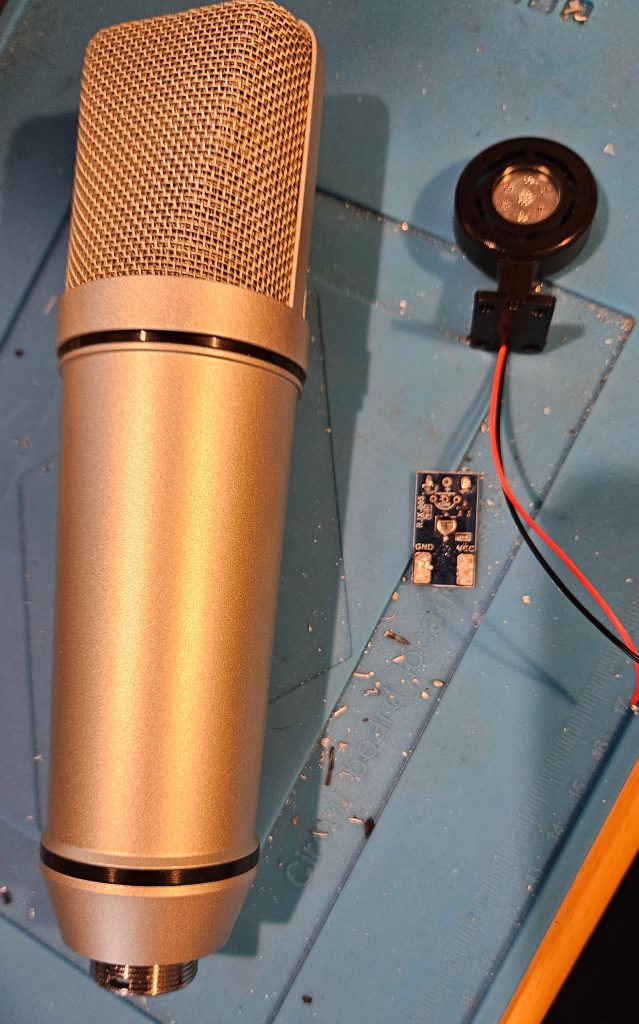
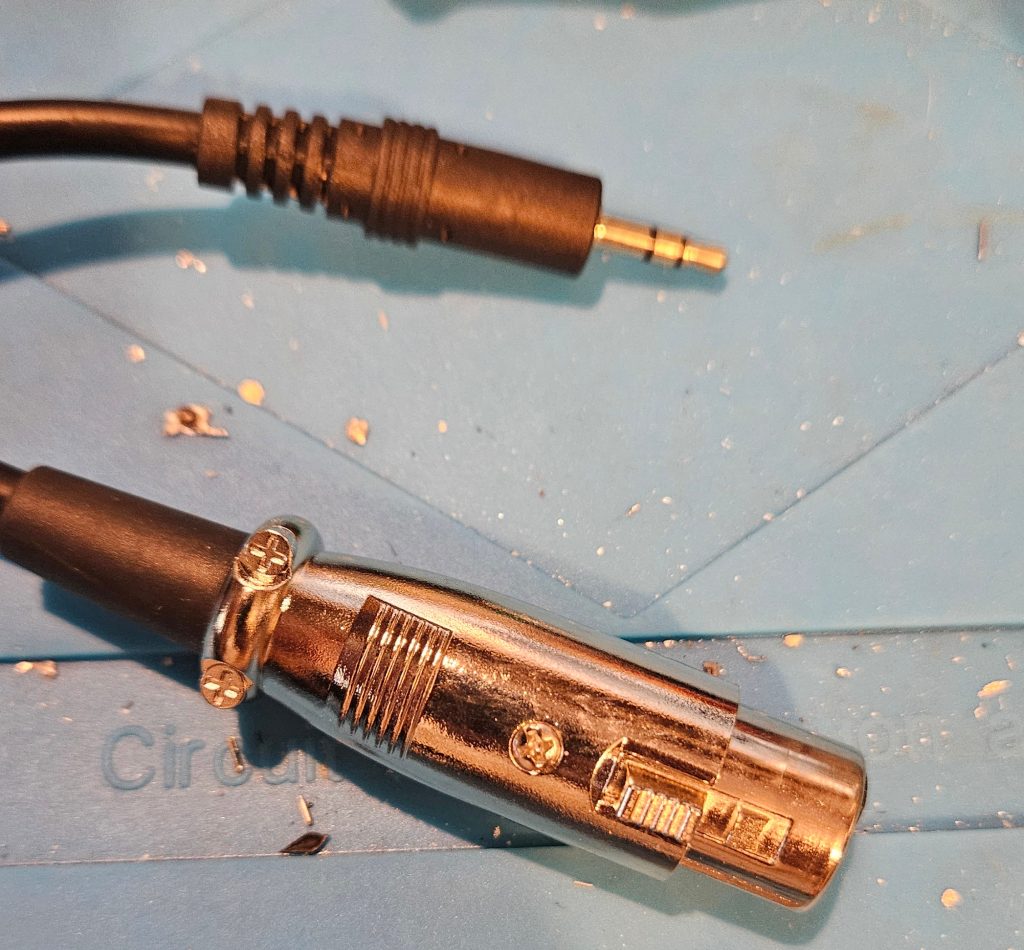
Robert Jenkins has a YouTube channel and he has designed some circuit boards which can produce a nice sounding condenser microphone, and he has made them available to buy, together with some of the more esoteric components that his design relies upon. I’ve never had call for a 1GΩ resistor before, but this circuit has 2 of them to help provide bias to the condenser capsule. I’d previously built his dynamic microphone preamp – basically a cheap Cloudlifter, and that works very well, so I decided to give his microphone upgrade circuit board a try.
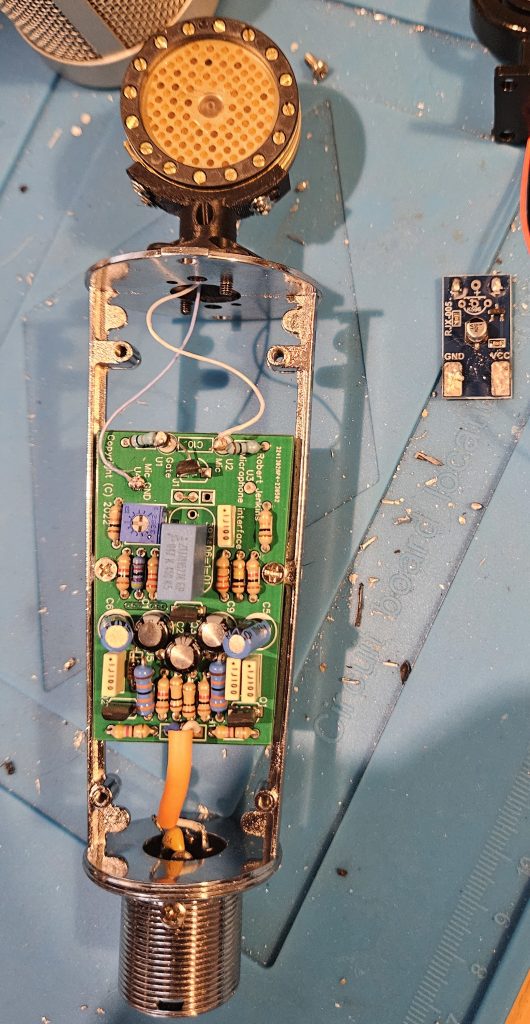
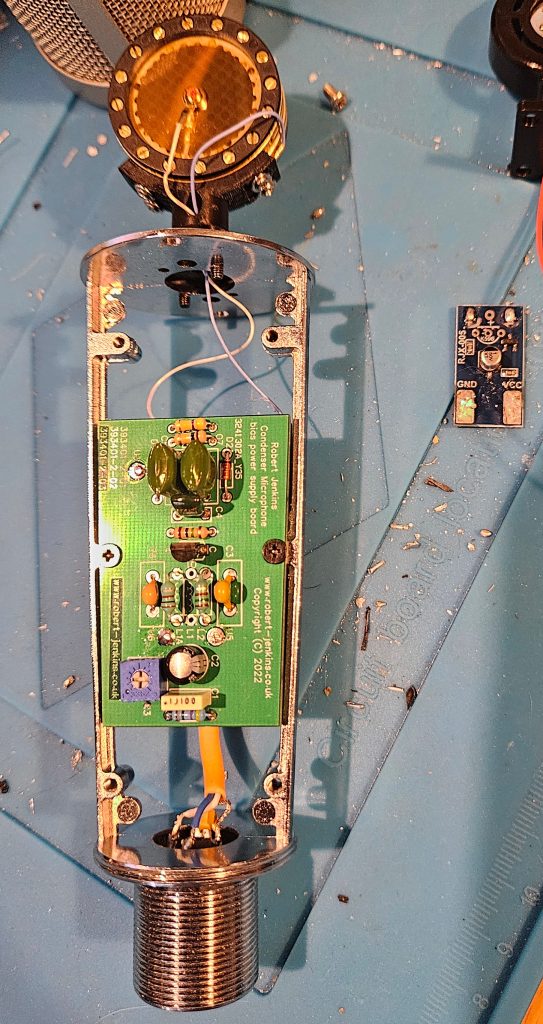
The capsule was probably the most expensive component, and probably the best place to spend your money, even so, it was very reasonable. I did need a friend to 3D print me a mount, as the one that came with the capsule didn’t work with the body that I had.
The documentation that comes from Robert Jenkins includes many variations that can be built with the circuit boards, I went with a JFET buffer and bipolar phase splitter input section and a Robert Jenkins NPN modulated current sinks output section.
The build went smoothly, right up until the end, when I was following the video for final assembly and followed his mistake for where to connect the condenser capsule, which meant I got very little output. I caught that one when I let the video run on, but then got quite a lot of em interference, but of course that was because my office is quite em noisy, and I didn’t have the case on the microphone. I probed a number of points around the circuit, and everything appeared to be fine.
Finally, I cased the mic up, which got rid of the em interference immediately, but the microphone seemed to need a lot of gain, and it appeared to have a very muddy sound. I was confused, it appeared to have a lack of high and mid frequencies. That was upsetting, I thought that I had got everything correct – I had bought good quality components.
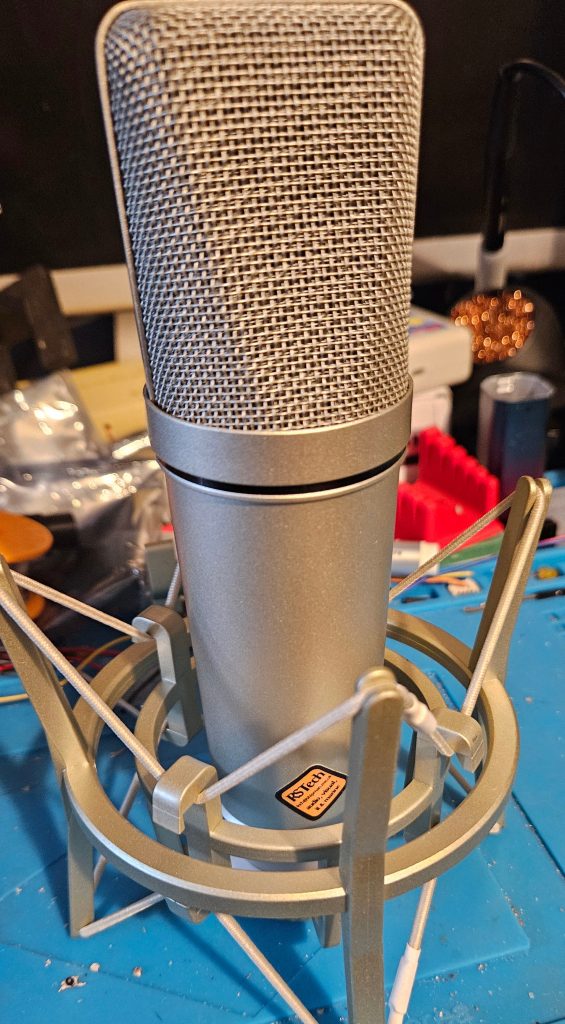
It turns out that I had been talking into the back of the condenser capsule – once I worked out what was the front, everything changed. It gives a lovely rounded sound, and doesn’t need too much gain on the interface. Very happy with the build, and I look forward to making some recordings with it.